Stable, treatable refraction
Confirm stable myopia and astigmatism, accurate manifest and cycloplegic refraction when indicated and whether the correction falls within the exact model’s approved range.

Explore ICL surgery through stable refraction, anterior-chamber depth and angle, endothelial-cell count, lens sizing and vault planning, retinal assessment and a direct comparison with LASIK and refractive lens exchange.
An Implantable Collamer Lens is placed behind the iris and in front of the natural lens to correct selected myopia and myopic astigmatism. The cornea is not reshaped and the natural lens remains, but this is still intraocular surgery with cataract, pressure, endothelial and device-position risks.
Final eligibility, exact lens model and power, toric or non-toric plan, sizing, iridotomy requirement, one- or two-eye timing, aftercare and travel clearance require assessment by the treating refractive surgeon.
ICL refers to STAAR Surgical’s Implantable Collamer Lens product family. The broader clinical category is a phakic intraocular lens: “phakic” means the natural lens remains in the eye. Exact EVO, EVO+, toric or other model availability and regulatory indication must be confirmed for Turkey and the treating hospital.
The lens is positioned in the posterior chamber, behind the coloured iris and in front of the natural crystalline lens. It can correct selected myopia and, with appropriate toric models, myopic astigmatism without removing corneal tissue.
Because the natural lens remains, existing accommodation may be preserved, but normal presbyopia and future cataract can still develop. ICL does not treat presbyopia, retinal disease, glaucoma, optic-nerve damage, amblyopia or every cause of blur.
The exact product labelling and local requirements apply. Meeting a prescription range alone does not establish eligibility.
Confirm stable myopia and astigmatism, accurate manifest and cycloplegic refraction when indicated and whether the correction falls within the exact model’s approved range.
Measure the space at the front of the eye and examine drainage angles. An eye that is too shallow or narrow may not have safe room for the implant.
Count endothelial cells and assess corneal health. The inner cell layer keeps the cornea clear and requires ongoing monitoring after a phakic lens is implanted.
Use appropriate internal-eye and external measurements to select lens size. Too little or too much vault between ICL and natural lens can create different risks.
Check for cataract, glaucoma, uveitis, iris or zonular concerns and retinal disease associated with high myopia; obtain specialist review when indicated.
Review pregnancy or breastfeeding, changing prescription, medicines, systemic health, night-driving goals and willingness to attend lifelong lens, pressure and endothelial checks.
Measurements, product calculations and surgeon judgment must agree. Repeat inconsistent data and treat ocular-surface problems rather than using a remote quotation as the surgical plan.
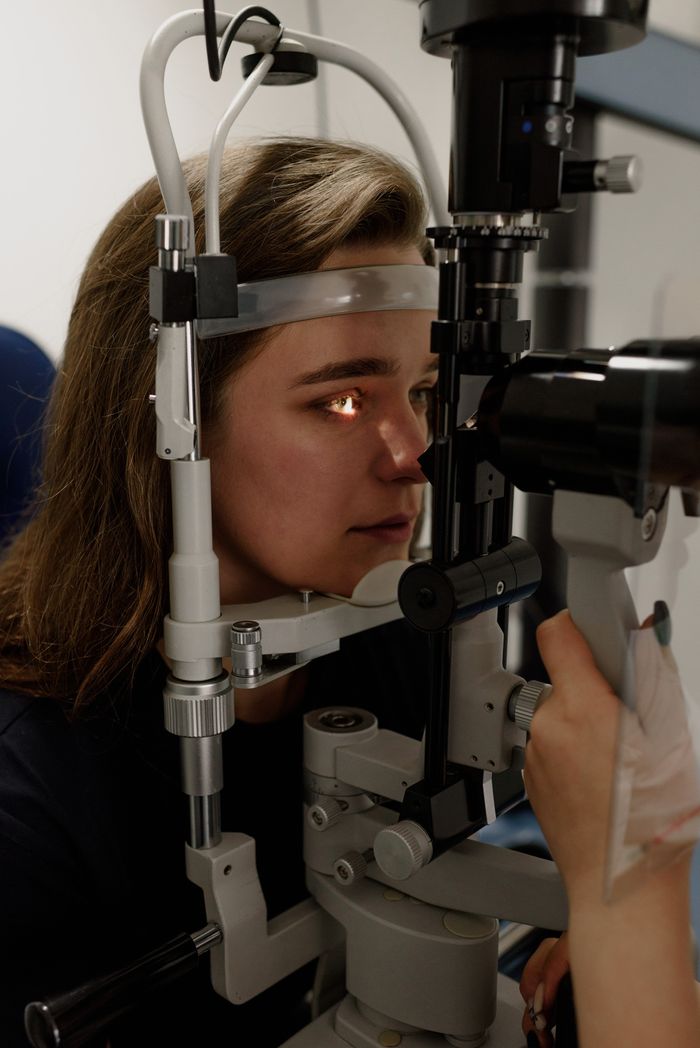 Slit-lamp examination: Ksenia Chernaya / Pexels
Measure corrected and uncorrected vision, refraction and pressure; examine the cornea, iris, angle, natural lens, retina and optic nerve and review previous prescriptions and surgery.
Ask how to share eye records securely →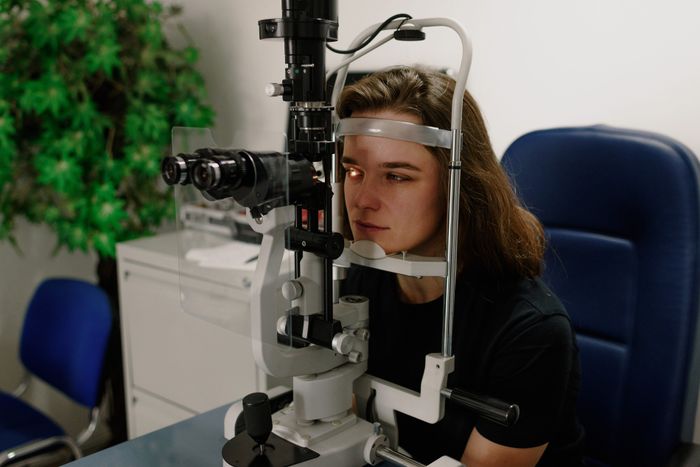 Ophthalmic measurement context: Ksenia Chernaya / Pexels
Assess chamber depth, angle and the measurements used by the selected sizing method. Name the proposed lens length and expected vault and explain how postoperative fit is checked.
Ask which sizing method is used →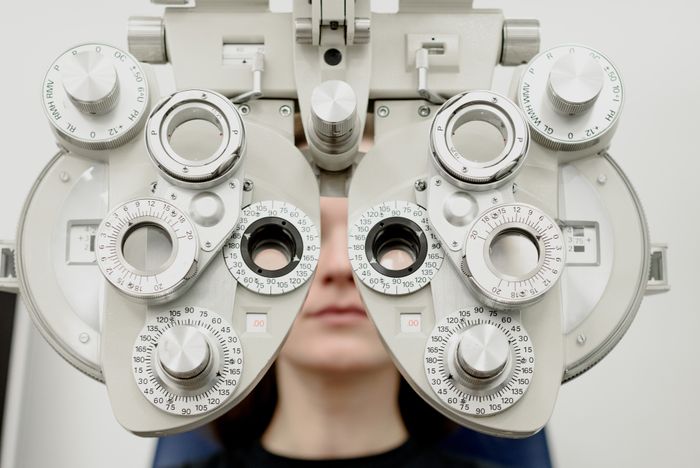 Optical assessment: Ksenia Chernaya / Pexels
Measure endothelial-cell density, examine corneal shape and health and use gonioscopy or other appropriate assessment of the drainage angle. Record a baseline for future monitoring.
Ask which baseline tests are included →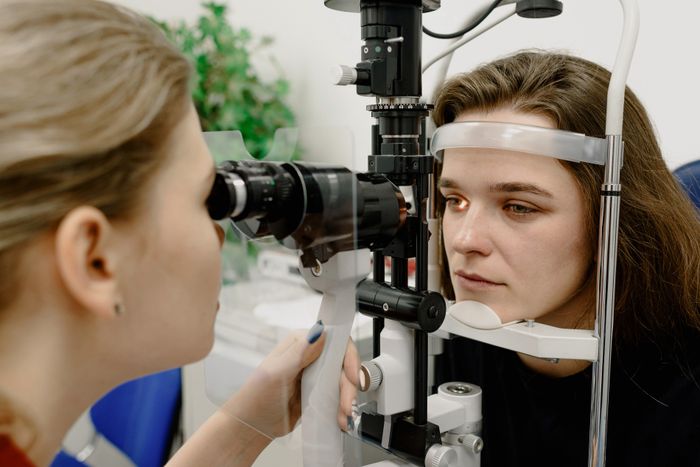 Eye-health assessment: Ksenia Chernaya / Pexels
Look for early lens opacity, assess pupils and night-vision symptoms and perform a dilated retinal examination. High myopia may require additional peripheral-retina assessment.
Request an individual risk discussion →An autorefraction or online questionnaire cannot establish chamber anatomy, endothelial health, ICL size or retinal risk. The operating surgeon should review every measurement and the exact product labelling before consent.
Steps vary by product and patient. Surgery is generally performed in a sterile operating room with local anaesthesia while the patient is awake and monitored.
Some phakic lens designs require peripheral iridotomy before implantation; central-port models may follow a different pathway. The team confirms the exact lens, size, power and eye.
Confirm: model, iridotomy, toric axis and sizing.
The eye is dilated, cleaned and anaesthetised. A small corneal incision is created and viscoelastic may be used to protect structures and maintain space.
Confirm: anaesthesia, sedation and sterile process.
The folded lens is inserted through the incision, unfolds inside the eye and is carefully positioned behind the iris and in front of the natural lens.
Confirm: size, orientation, toric alignment and handling.
The surgeon removes viscoelastic as required, checks the lens and eye and applies postoperative medicines. Early pressure and vault review are essential.
Confirm: pressure check, drops and first review.

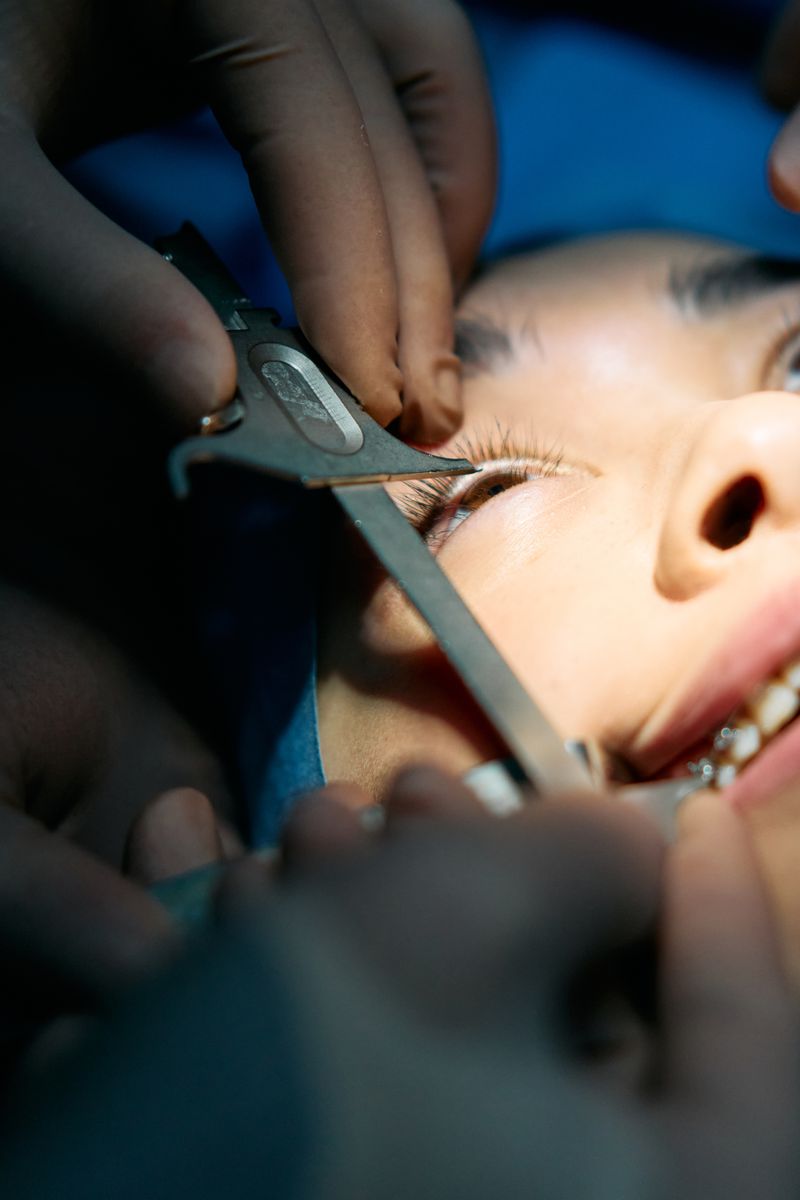
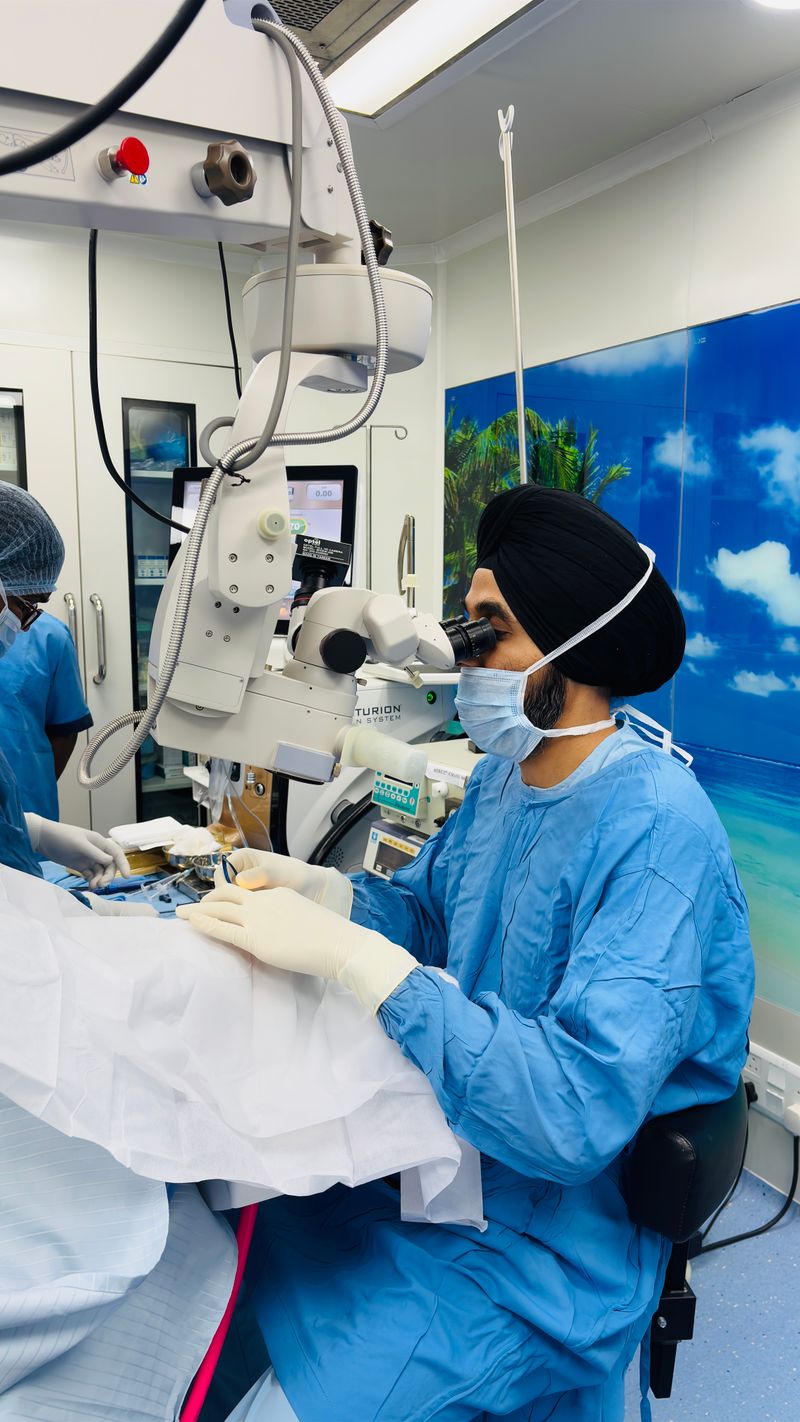
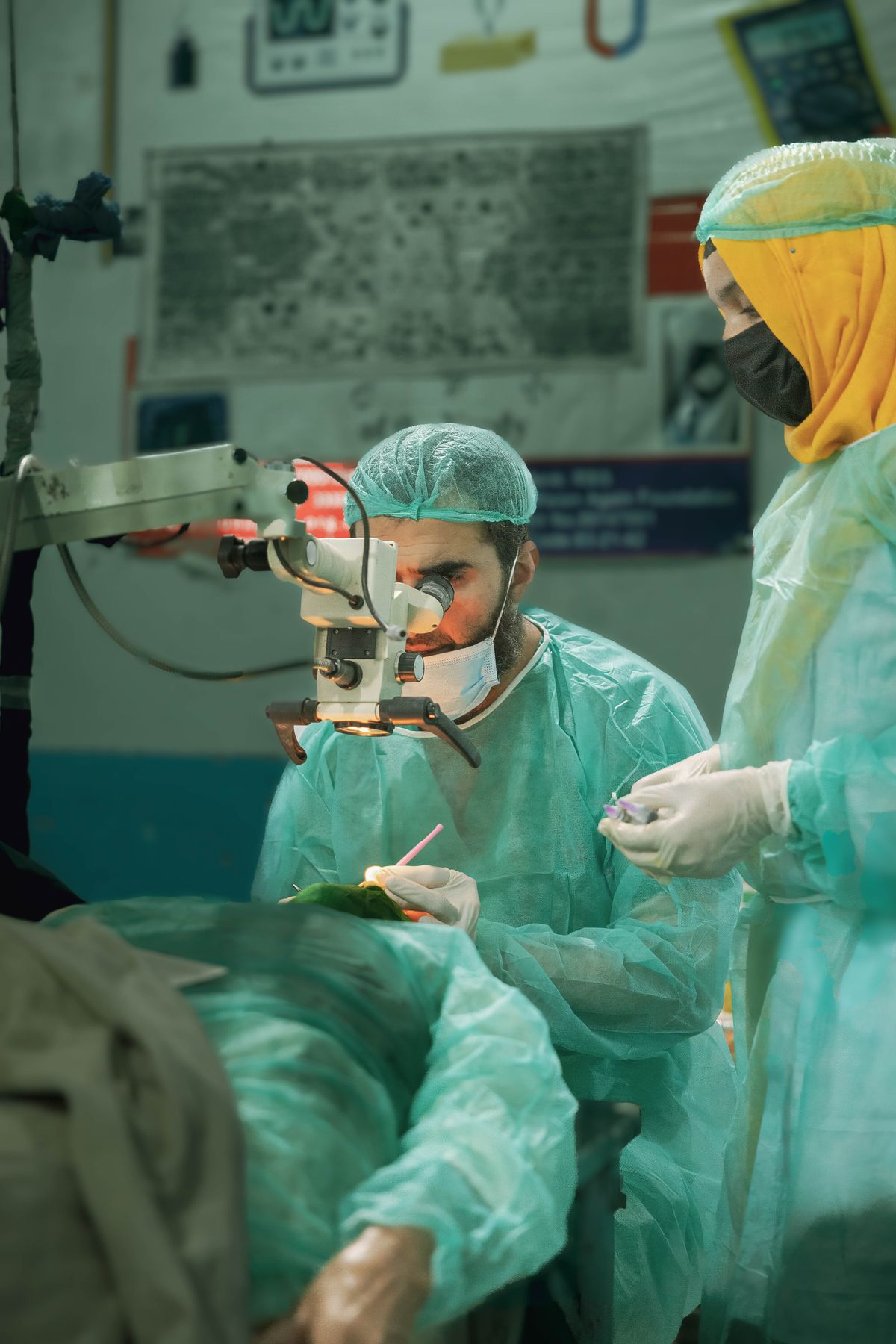
The gallery uses real ophthalmic-surgery photography and an authentic postoperative ICL slit-lamp image. It does not depict VIPmedi cases, partner facilities or promised results.
The right option depends on prescription, corneal anatomy, chamber depth, endothelial health, natural-lens function, retinal risk, age, accommodation, eye health and visual priorities.
ICL avoids corneal tissue removal and preserves the natural lens, but requires suitable internal-eye anatomy and lifelong monitoring for pressure, lens, endothelium and implant position.
Discuss: model, sizing, vault and long-term checks.
LASIK, PRK and SMILE alter corneal focusing power. They avoid an intraocular implant but have corneal tissue, shape, dry-eye and approved-treatment limits.
Discuss: corneal reserve, ocular surface and night vision.
RLE can address refractive and presbyopia goals but permanently removes natural accommodation and has a different retinal and intraocular risk balance.
Discuss: natural-lens value, retina and IOL optics.
Spectacles and properly managed contact lenses remain reversible options without surgical risk. They may be the safest choice when anatomy or expectations make surgery unsuitable.
Discuss: comfort, safety and realistic daily needs.
ICL may be attractive when a prescription is high or the cornea is unsuitable for laser correction, but only if internal anatomy, endothelial health, sizing, lens status and follow-up support implantation.
Online information can support initial planning, but lens model, power and size require an in-person examination and product-specific calculations.
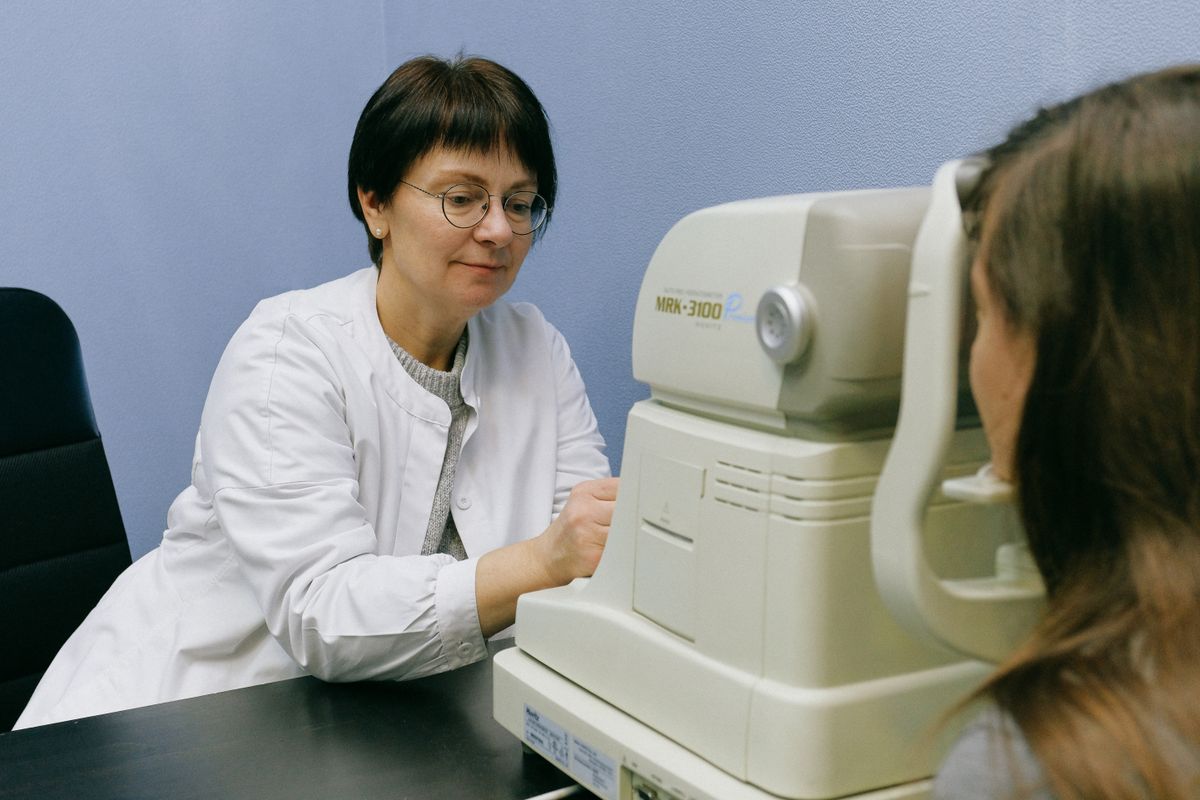
Remain for the clinic’s required early examinations and travel only when pressure, implant position, vault and vision are considered stable. Do not drive while dilated, sedated or visually unsafe. There is no universal fit-to-fly timetable.
Ask the surgeon to explain product-specific warnings and personal risk, including how size and vault affect the natural lens, angle and pressure.
Contact or close proximity between the implant and natural lens, age, high myopia and time can contribute to lens opacity and possible cataract surgery.
Residual viscoelastic, pupillary block, excessive vault, angle narrowing or pigment dispersion can increase pressure and may require medicines, laser or lens exchange or removal.
Damage or progressive endothelial-cell loss can affect corneal clarity. A baseline count and ongoing monitoring are important while the implant remains.
Incorrect fit, displacement or toric rotation can cause risk or residual astigmatism and may require repositioning, exchange or removal in another operation.
Endophthalmitis, iritis and other intraocular inflammation are uncommon but potentially sight-threatening. Prompt recognition and specialist treatment matter.
Under- or overcorrection, astigmatism, glare, halos, starbursts, ghosting or reduced night quality can leave a need for glasses, laser treatment or lens surgery.
VIPmedi can coordinate enquiries with participating ophthalmology and phakic-lens teams within Acıbadem, Memorial, Medical Park, Medipol, Medicana and Dünyagöz. The branch, surgeon, diagnostics, exact lens model, stock and eligibility are confirmed individually.
 Acıbadem
 Memorial
 Medical Park
 Medipol
 Medicana
 Dünyagöz
A group logo does not mean every branch offers ICL or every model. Ask for the named surgeon and hospital, exact STAAR or other phakic-IOL product, power and size, local regulatory status, diagnostic and sizing method, toric availability, iridotomy policy, pressure and vault reviews and emergency pathway.
An individual estimate should name the implant and clinical pathway. A per-eye headline may exclude sizing diagnostics, toric correction, iridotomy, medicines, reviews or unplanned repositioning.
The treating surgeon’s instructions override general timelines. Quick visual improvement does not replace scheduled checks of pressure, angle, vault, natural lens and corneal endothelium.
Arrange transport, use prescribed drops and shields and avoid rubbing. Early pressure may need checking before discharge or within the clinic’s specified period.
Attend the required examination even if vision seems clear. The clinician checks pressure, cornea, inflammation, lens position, toric axis, vault and drainage angle.
Continue medicines and follow individual rules for washing, make-up, exercise, swimming, contact sports, dusty environments, screens, work and driving.
Attend periodic pressure, endothelial-cell, vault, lens and retinal checks. Presbyopia, cataract, glaucoma or retinal disease can still develop later.

Follow emergency instructions for sudden or rapidly worsening vision, severe or increasing pain, headache or nausea with eye pain, increasing redness, discharge, marked light sensitivity, injury or a pupil or visual change.
New flashes, a sudden increase in floaters, a curtain or shadow, distortion or central blur also needs urgent assessment. Contact VIPmedi for coordination support, but use emergency eye services when the situation is time-critical.
Use the VIPmedi contact page. Include your age, current and previous prescriptions, contact-lens use, eye diagnoses or surgery, health conditions, medicines, night-vision symptoms and preferred travel period. Ask how requested records should be shared securely.
ICL is terminology associated with STAAR Surgical’s Implantable Collamer Lens family. It is a foldable phakic intraocular lens placed behind the iris and in front of the natural lens. Unlike an external contact lens, it remains inside the eye and does not require daily handling, but it requires surgery and long-term monitoring.
Exact indications depend on manufacturer, model and local approval. EVO and related ICL products are principally used for selected myopia, with toric versions for myopic astigmatism. They do not treat presbyopia, cataract or retinal and optic-nerve disease and do not guarantee freedom from glasses.
“Phakic IOL” is the broader device category for an artificial lens implanted while the natural lens remains. ICL refers to STAAR Surgical’s Collamer product family. Other phakic designs may use different material, position, sizing, iridotomy and follow-up requirements. Ask for the exact product rather than accepting a generic label.
Assessment typically includes stable refraction, anterior-chamber depth, angle examination, endothelial-cell density, corneal health, pressure, pupil, natural-lens and dilated retinal evaluation, plus measurements for device sizing. Exact model criteria and the surgeon’s clinical judgment apply.
Possibly, but thin corneas only explain why corneal laser surgery may be unsuitable. ICL requires enough internal eye space, an acceptable angle and endothelial-cell count, a healthy natural lens, suitable retina and pressure and reliable sizing. A separate phakic-lens assessment is essential.
It depends on the exact implant. Some older or non-central-port phakic lens designs require laser openings in the iris to reduce pupillary-block risk. Some central-port models follow a different fluid-flow pathway. Ask for the manufacturer, model and written explanation of whether iridotomy is required.
After anaesthesia and sterile preparation, the surgeon creates a small corneal incision, injects the folded lens and positions its supports behind the iris and in front of the natural lens. Viscoelastic is removed as required, and lens position, pressure and the eye are checked. Toric models require axis alignment.
Practice varies. Some surgeons stage the eyes so pressure, vault, recovery and refractive response in the first can be reviewed before the second. Same-day bilateral treatment may be used in selected pathways with specific safety processes. Each eye needs separate measurements, device selection, consent, sterile procedure and follow-up.
Anaesthetic drops or local anaesthesia are used, and sedation may be offered. Patients may notice pressure, bright light, fluid or unusual sensations. Mild irritation can occur after surgery. Severe or increasing pain, headache with nausea or worsening vision requires urgent ophthalmic assessment.
The implant can usually be surgically removed or exchanged, but this requires another intraocular operation with its own risks. Removal does not guarantee the eye or vision returns exactly to its previous state, especially if cataract, endothelial damage, pressure problems or another complication has occurred.
Potential complications include cataract, high or low vault, pressure rise, angle narrowing, pupillary block, glaucoma, endothelial-cell loss, corneal swelling, inflammation, infection, ICL movement or toric rotation, retinal detachment, residual prescription, optical symptoms, loss of best-corrected vision and the need for repositioning, exchange or removal.
Yes. The natural lens remains and continues to age. ICL does not stop presbyopia, so reading glasses may be needed later. Natural-lens clouding can also develop, and cataract surgery may then require removal of the ICL and replacement of the natural lens with another implant.
Size is selected from product-specific calculations using measurements of the eye. After implantation, the surgeon assesses the space between ICL and natural lens—the vault—along with angle, pressure and lens position. Too little or too much vault may prompt closer monitoring, repositioning, exchange or removal.
Do not drive while dilated, sedated, blurred or until the treating team confirms that vision meets the applicable standard. Stay through required pressure and vault reviews and fly only when cleared. Keep the implant card, model, power, size, toric axis, measurements, operative report, drops, warning signs and contacts. Contact VIPmedi for an individual enquiry.
Tell us about your prescription, contact-lens use, eye and health history, previous procedures, night-driving needs and preferred travel period. VIPmedi can help coordinate the next appropriate enquiry with a participating partner hospital.
Use the contact page for your initial enquiry. Avoid sending identity documents or complete medical records in the first message; ask how requested information should be shared securely.