Prescription and presbyopia
Confirm stable refraction, distance and near needs, remaining accommodation and whether the goal can be met by glasses, contacts or a less invasive refractive procedure.

Explore refractive lens exchange through a surgeon-led assessment of prescription, presbyopia, natural-lens function, retina, cornea, optical biometry and whether LASIK, ICL, glasses or no surgery is safer.
Lens replacement surgery—also called refractive lens exchange or clear-lens extraction—removes the natural lens and replaces it with an artificial intraocular lens for refractive goals. It uses the same core operation as cataract surgery, but when the natural lens is clear or only mildly cloudy, the risk-benefit threshold is different.
Final suitability, IOL model and power, one- or two-eye timing, anaesthesia, medicines, recovery, driving and travel clearance require assessment by the treating refractive lens surgeon.

The operation can correct a planned amount of short-sightedness, long-sightedness and astigmatism and can use different IOL designs to manage presbyopia. Its purpose is to reduce dependence on glasses or contact lenses, not to guarantee spectacle-free vision.
Removing the natural lens is permanent. The treated eye will not later develop a cataract in that removed lens, but it also loses any remaining natural accommodation—the ability of the youthful lens to change focus. An artificial lens cannot fully reproduce a healthy young natural lens.
RLE does not treat retinal disease, glaucoma, optic-nerve damage, corneal disease or amblyopia. Posterior capsule opacity can develop after surgery and may later require YAG laser treatment.
The surgeon should weigh likely refractive benefit against the value of the natural lens and the eye’s individual intraocular-surgery risk.
Confirm stable refraction, distance and near needs, remaining accommodation and whether the goal can be met by glasses, contacts or a less invasive refractive procedure.
Assess lens clarity and flexibility. Early cataract or substantial presbyopia changes the balance differently from removing a clear, still-accommodating lens in a younger eye.
High myopia, long axial length, retinal tears or degeneration, previous detachment, symptoms or family history may require retinal-specialist review and can make RLE less attractive.
Dry eye, irregular astigmatism, keratoconus, endothelial weakness and previous LASIK affect measurement accuracy, visual quality and the choice between corneal and lens surgery.
Review macula, optic nerve, glaucoma, uveitis, pupil behaviour, angle anatomy, zonules, previous eye surgery and conditions that may limit benefit or complicate surgery.
Discuss night driving, reading, occupation, binocular vision, tolerance of halos or glasses, medical health, medication adherence and access to urgent and long-term eye care.
Dry eye, contact lenses, previous refractive surgery and inconsistent fixation can distort IOL calculations. Treat, repeat and reconcile rather than rushing to a lens package.
 Slit-lamp examination: Ksenia Chernaya / Pexels
Measure corrected and uncorrected vision, refraction, eye dominance and pressure; examine the natural lens, cornea, pupil and eye structures and review prior prescriptions and surgery.
Ask how to share eye records securely →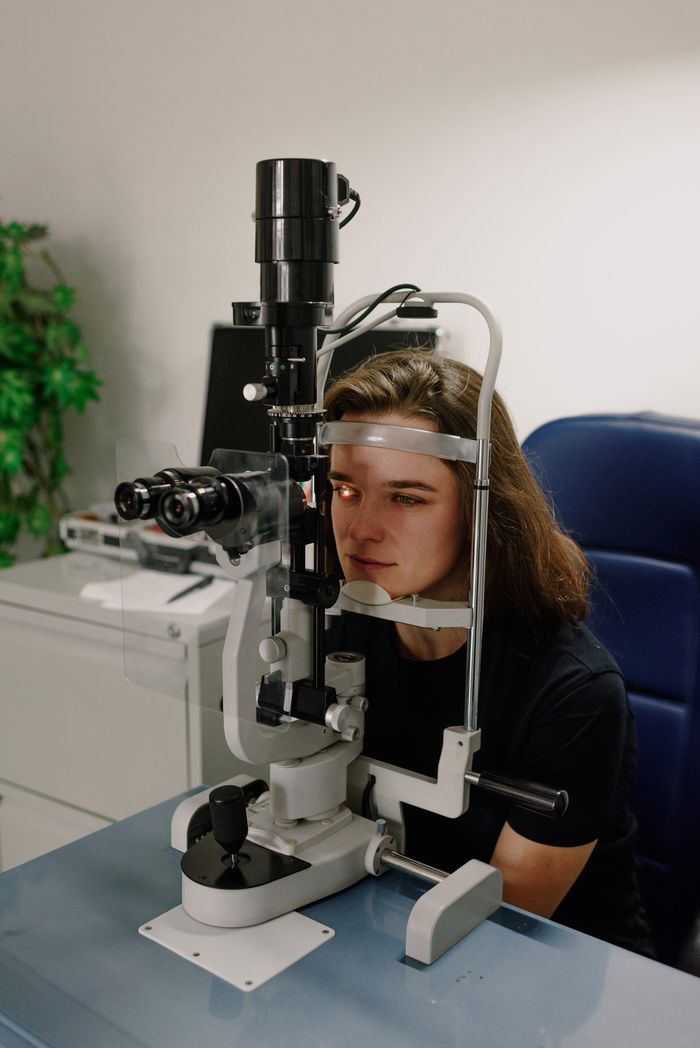 Ophthalmic diagnostics: Ksenia Chernaya / Pexels
Measure axial length and corneal power, verify data quality and use suitable formulas. Previous LASIK, extreme eye length or unusual anatomy requires specialised planning and wider uncertainty counselling.
Ask which calculations are included →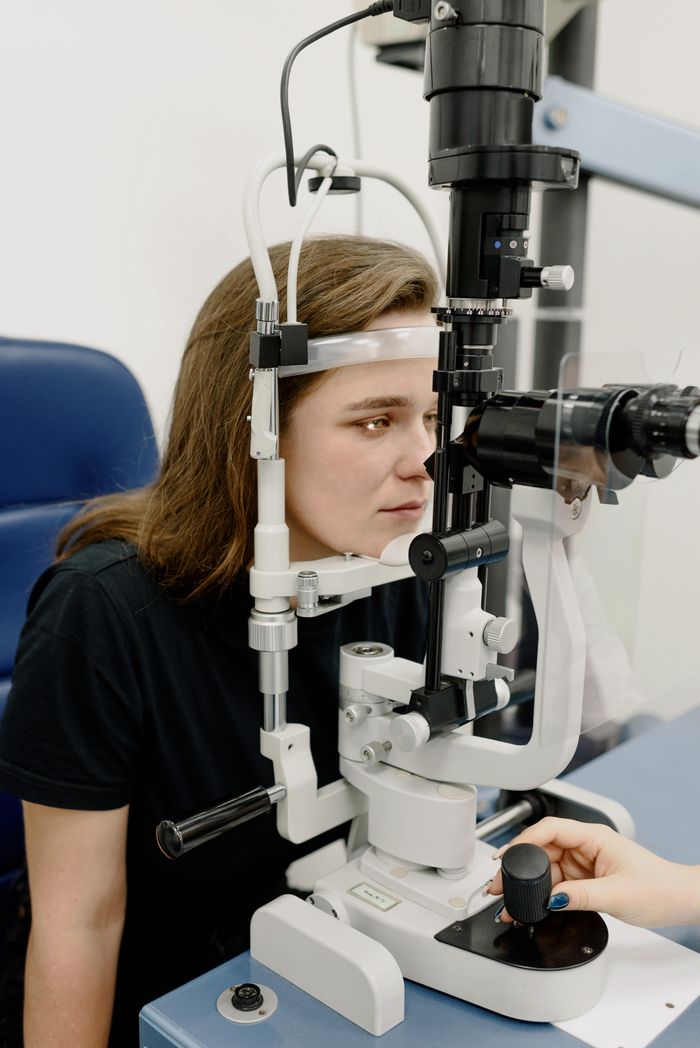 Eye-measurement context: Ksenia Chernaya / Pexels
Assess tear quality, corneal curvature and astigmatism; use topography or tomography when indicated. Determine whether toric correction or another strategy is reasonable.
Describe contact-lens and dry-eye history → Lens-selection context: AI25.Studio / Pexels
Perform dilated retinal assessment and OCT or other tests when indicated. Match monofocal, toric or presbyopia-correcting options to eye health, visual priorities and side-effect tolerance.
Request an individual IOL discussion →An online prescription cannot show retinal risk, lens function, macular health, corneal suitability or the best target. The operating surgeon must examine the eyes and review the final measurements before consent.
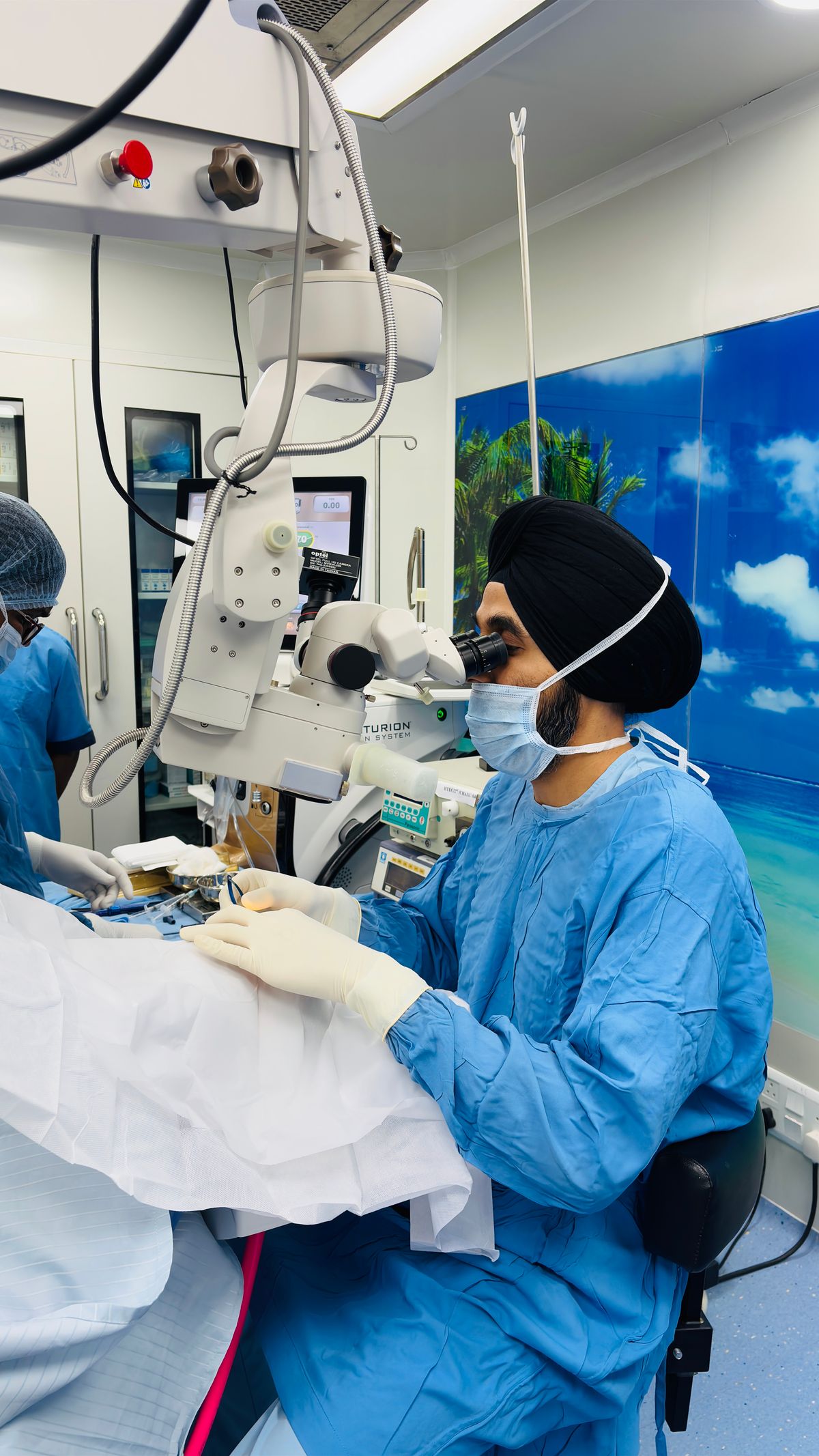
Technique and anaesthesia vary. The operation is commonly performed through small corneal incisions with local anaesthesia while the patient is awake and monitored.
The team repeats identity, eye, implant and power checks; dilates and cleans the eye and gives anaesthesia. Sedation or another anaesthetic approach may be used when appropriate.
Confirm: surgeon, eye, IOL model, power and target.
The surgeon enters through the cornea and opens the front of the natural-lens capsule. Additional devices may be required for a small pupil or weak lens support.
Confirm: complexity factors and contingency plan.
Ultrasound and irrigation-aspiration remove the natural-lens material while preserving the capsule when possible. This permanently removes natural accommodation.
Confirm: reason that removal is preferred to alternatives.
A folded IOL is normally placed inside the remaining capsule and unfolded. The surgeon checks position, wound sealing and the eye before applying medicines and a shield.
Confirm: implant card, drops and first review.
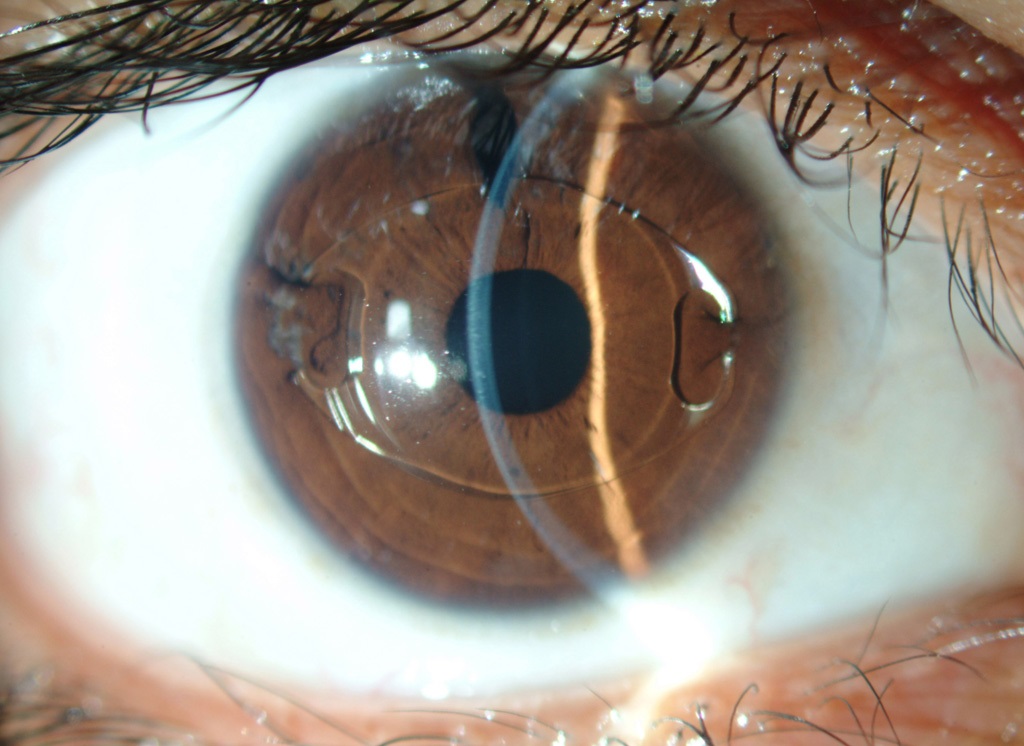

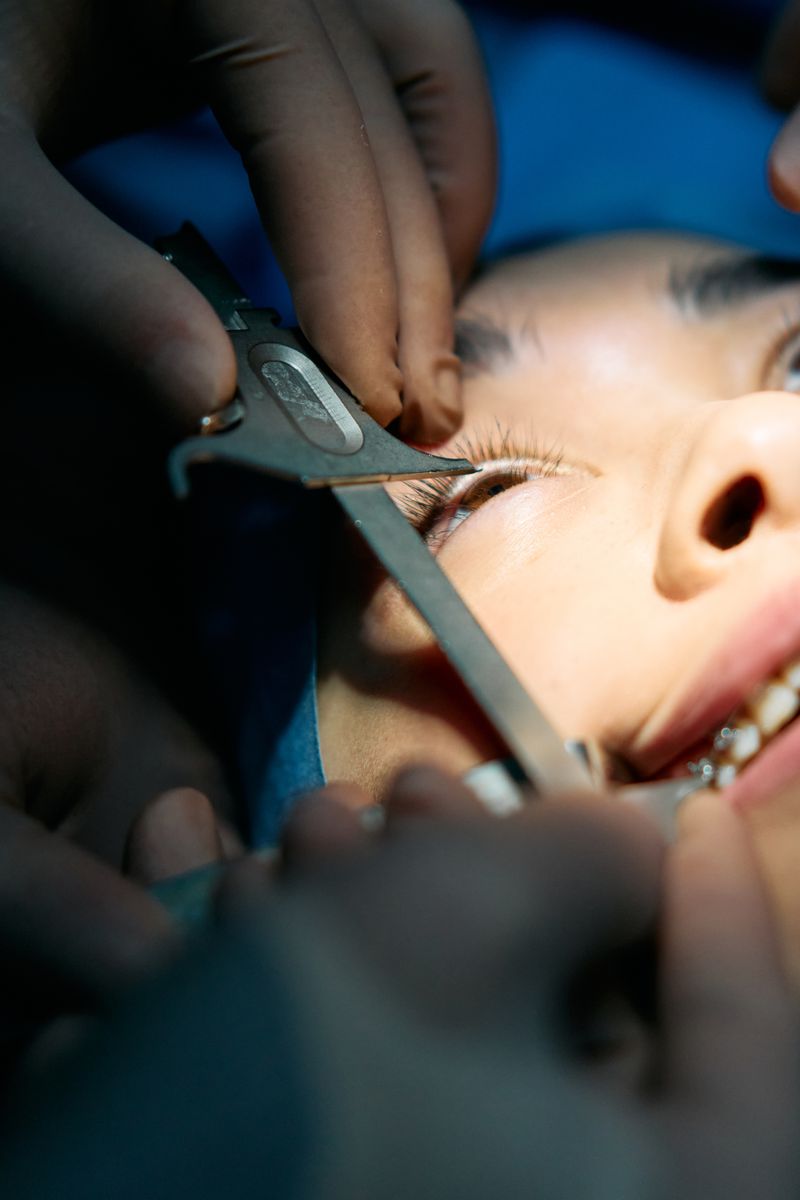
The gallery uses real intraocular and ophthalmic-surgery photography, including an authentic implanted-IOL image. It does not depict VIPmedi cases, partner facilities or promised results.
The decision depends on age and accommodation, prescription, corneal and lens status, anterior-chamber anatomy, retinal risk, eye health, goals and acceptance of each procedure’s compromises.
RLE replaces the natural lens with an IOL and can address presbyopia through lens strategy. It is intraocular surgery and permanently removes remaining natural accommodation.
Discuss: retinal risk, IOL optics and future glasses.
LASIK, PRK and SMILE change corneal focusing power without entering the eye or preventing a later cataract. Corneal thickness, shape, dry eye and treatment range limit suitability.
Discuss: accommodation, cornea and later lens change.
A phakic IOL is implanted while the natural lens remains. It may preserve accommodation and suit selected higher prescriptions, but is intraocular surgery with its own anatomical requirements and risks.
Discuss: chamber depth, endothelium, pressure and cataract risk.
Updated glasses, multifocal or monovision contacts and time may meet the visual goal without surgical risk. If cataract later becomes significant, surgery can be reconsidered then.
Discuss: reversible trials and true daily-life priorities.
Ask the surgeon to document why RLE offers a better balance than glasses, contact lenses, corneal laser correction or ICL for the individual eye. A second opinion is reasonable when recommendations differ or the decision feels rushed.
Remote information can support preliminary planning, but final suitability, lens power and target require in-person examination and repeatable measurements.

Remain through the required early review and travel only when the surgeon considers recovery stable. Do not drive while dilated, sedated or visually unsafe. A complication, retinal procedure or gas bubble can change flying restrictions.
Potential benefit is reduced glasses dependence. The trade is permanent natural-lens removal and exposure to the risks of intraocular surgery in an eye that may otherwise be healthy.
Risk deserves particular attention in high myopia and long eyes. New flashes, many floaters, a curtain or shadow or sudden visual loss requires urgent retinal assessment.
Endophthalmitis, severe inflammation, macular swelling and abnormal pressure can threaten vision and may require urgent medicines, injections, laser or further surgery.
The capsule can tear or its supports can fail. Lens material may move backward, a different IOL position may be required and retinal surgery can become necessary.
Corneal swelling, endothelial damage, wound leak, inflammation or infection can blur vision and require prolonged treatment or another procedure.
Unexpected prescription, astigmatism, lens rotation, decentration or an unwanted target can require glasses, corneal laser treatment, IOL repositioning or exchange.
Halos, glare, arcs, shadows, ghosting, contrast change or double vision can occur. Natural accommodation does not return, and some patients cannot adapt to the chosen optics.
VIPmedi can coordinate enquiries with participating ophthalmology and refractive-lens teams within Acıbadem, Memorial, Medical Park, Medipol, Medicana and Dünyagöz. The branch, operating surgeon, diagnostics, IOL inventory and eligibility are confirmed individually.
 Acıbadem
 Memorial
 Medical Park
 Medipol
 Medicana
 Dünyagöz
A group logo does not mean every branch offers every IOL or RLE pathway. Ask for the exact hospital and surgeon, diagnostics, named lens manufacturer and model, regulatory status, retinal backup, formula strategy, anaesthesia, early reviews and complication arrangements before booking travel.
Compare the full clinical plan rather than a per-eye headline. Diagnostics, exact implant, astigmatism correction, one- or two-eye timing and follow-up can change both care and cost.
The treating surgeon’s instructions override general timelines. Vision can fluctuate, and an eye that feels comfortable can still need scheduled pressure, implant and retinal checks.
Arrange transport, use the shield as directed and begin prescribed drops. Do not rub the eye, drive or make important visual judgments while dilated or sedated.
Attend the required examination even when vision feels clear. The clinician checks healing, inflammation, pressure, cornea, implant position and retina as indicated.
Use medicines exactly as prescribed and follow individual advice for washing, make-up, bending, lifting, exercise, swimming, dusty environments, work and driving.
Complete the planned binocular and glasses review. Continue routine retinal, glaucoma and macular care and report new optical symptoms or posterior capsule opacity.

Follow emergency instructions for sudden or rapidly worsening vision, severe or increasing pain, increasing redness, discharge, marked light sensitivity, injury, nausea with eye pain or symptoms that worsen rather than improve.
New flashes, a sudden increase in floaters, a curtain or shadow, distortion or central blur also needs urgent assessment. Contact VIPmedi for coordination support, but use emergency eye services when the situation is time-critical.
Use the VIPmedi contact page. Include your age, current and previous prescriptions, distance and near priorities, contact-lens use, eye diagnoses or surgery, health conditions, medicines, night-driving needs and preferred travel period. Ask how requested records should be shared securely.
Lens replacement surgery, refractive lens exchange or clear-lens extraction removes the natural lens and replaces it with an artificial intraocular lens to change focusing power and reduce reliance on glasses or contacts. It is a permanent intraocular operation using the same core surgical steps as cataract surgery.
The operation is essentially the same, but the indication differs. Cataract surgery removes a lens that has become cloudy and is impairing vision. RLE is performed mainly for refractive goals when the lens may still be clear or only mildly changed. Therefore, the value of removing the natural lens must be weighed especially carefully.
Assessment may consider people with presbyopia, long-sightedness, selected high prescriptions, early lens change or anatomy that makes other procedures less appropriate. Suitability depends on remaining accommodation, retina, cornea, macula, optic nerve, pressure, angle, biometry, health, visual priorities and alternatives—not one age or prescription threshold.
There is no universal online age rule. Removing a younger clear lens sacrifices more natural accommodation and may create a less favourable risk-benefit balance, especially in high myopia. Age, presbyopia, lens function, cataract change, prescription, retinal risk and available alternatives must be considered together.
Yes. The natural lens’s accommodation is permanently removed. An IOL can be selected for one target, extended range or multiple focal ranges, or the eyes can receive different targets, but no artificial lens fully recreates the dynamic focusing of a healthy young natural lens.
Broad categories include monofocal, toric, multifocal, trifocal and extended-depth-of-focus designs, plus monovision or mini-monovision target strategies. Models differ within categories. Ask for the exact manufacturer, model, material, optical design, target, expected glasses use, side effects, regulatory status and alternatives.
Not necessarily. Residual prescription, astigmatism, healing, eye health, chosen targets and the limits of IOL optics can leave a need for glasses. Presbyopia-correcting lenses may reduce dependence across more distances but can introduce halos, glare or contrast trade-offs. No responsible provider should guarantee spectacle independence.
Potential complications include infection, inflammation, pressure change, corneal or macular swelling, capsular rupture, retained or dropped lens material, retinal tear or detachment, residual prescription, IOL rotation or displacement, optical intolerance, need for laser or further surgery and rare permanent loss of sight or the eye.
Natural-lens removal can be followed by retinal tear or detachment, and the discussion is particularly important for high myopia, long axial length or previous retinal problems. A dilated peripheral retinal examination and, when indicated, retinal-specialist input help define the individual balance. New flashes, floaters or a curtain require urgent assessment.
An IOL may sometimes be repositioned or exchanged, but another intraocular operation carries additional risk and becomes more complex as the capsule heals or after YAG laser treatment. Exchange cannot restore the removed natural lens or guarantee the desired result. The first lens decision should therefore be made carefully.
Practice varies. Many pathways use separate dates, allowing the first eye’s healing and refractive response to inform the second-eye plan. Same-day bilateral treatment may be considered in selected settings with specific safety processes. Each eye needs its own assessment, measurements, consent, sterile procedure and follow-up.
Many procedures use anaesthetic drops or local anaesthesia while the patient is awake, sometimes with sedation. Bright light, pressure, movement or unusual sensations may be noticed. Anaesthesia is individual. Mild irritation can occur afterward, but severe or increasing pain requires prompt ophthalmic advice.
The removed natural lens cannot later form a cataract. However, the capsule supporting the artificial lens may become cloudy; this is posterior capsule opacity. It can often be treated with YAG laser when clinically appropriate. YAG has its own risks and may complicate later IOL exchange, so it should not be performed casually.
Do not drive while dilated, sedated, blurred or until the treating team confirms that vision meets the applicable standard. Stay through required early review and fly only when recovery is stable and the surgeon clears travel. Keep the implant card, measurements, operative report, drops, warning signs, estimate and named contacts. Contact VIPmedi for an individual enquiry.
Tell us about your prescription, distance and near goals, eye and health history, contact-lens use, previous procedures, night-driving needs and preferred travel period. VIPmedi can help coordinate the next appropriate enquiry with a participating partner hospital.
Use the contact page for your initial enquiry. Avoid sending identity documents or complete medical records in the first message; ask how requested information should be shared securely.