Facial-hair design measured in direction, angle, and detail

Beard Transplant in Turkey

Explore personalised restoration for selected beard, moustache, goatee, sideburn, and stable facial-scar concerns—with careful donor matching and hair-by-hair direction across every facial zone.

A beard transplant redistributes suitable donor follicles, most often from the scalp. It does not create new biological facial-hair capacity or treat an active autoimmune, inflammatory, infectious, hormonal, or scarring condition.

Donor match assessedUltra-flat facial anglesConservative permanent design

Photographs can support an initial design review, but final diagnosis, skin assessment, donor suitability, and recipient-site planning require an in-person clinical examination.

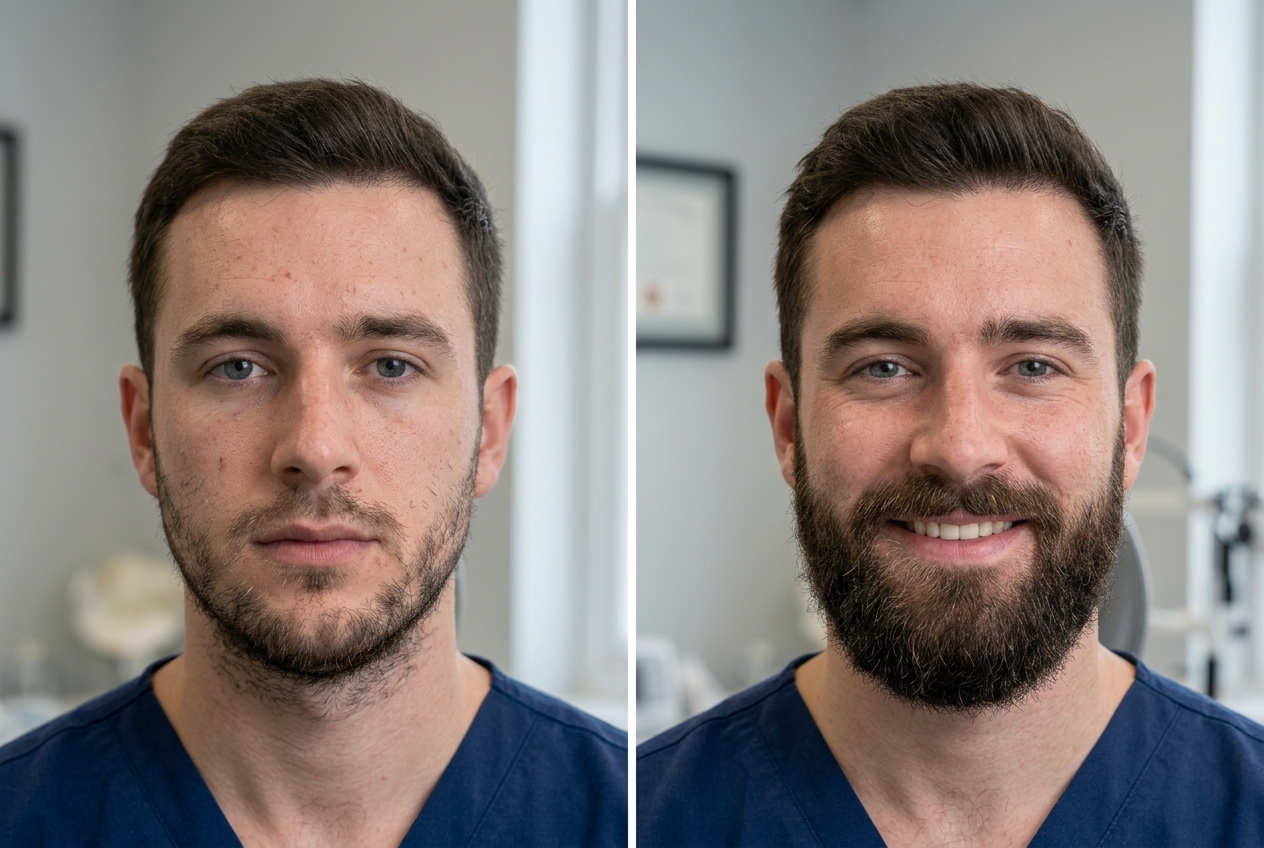
Close-up portrait of a man with a full beard
Natural facial hair is directional, not uniformReal editorial photography. The person shown is a VIPmedi patient and the image represent a treatment result.
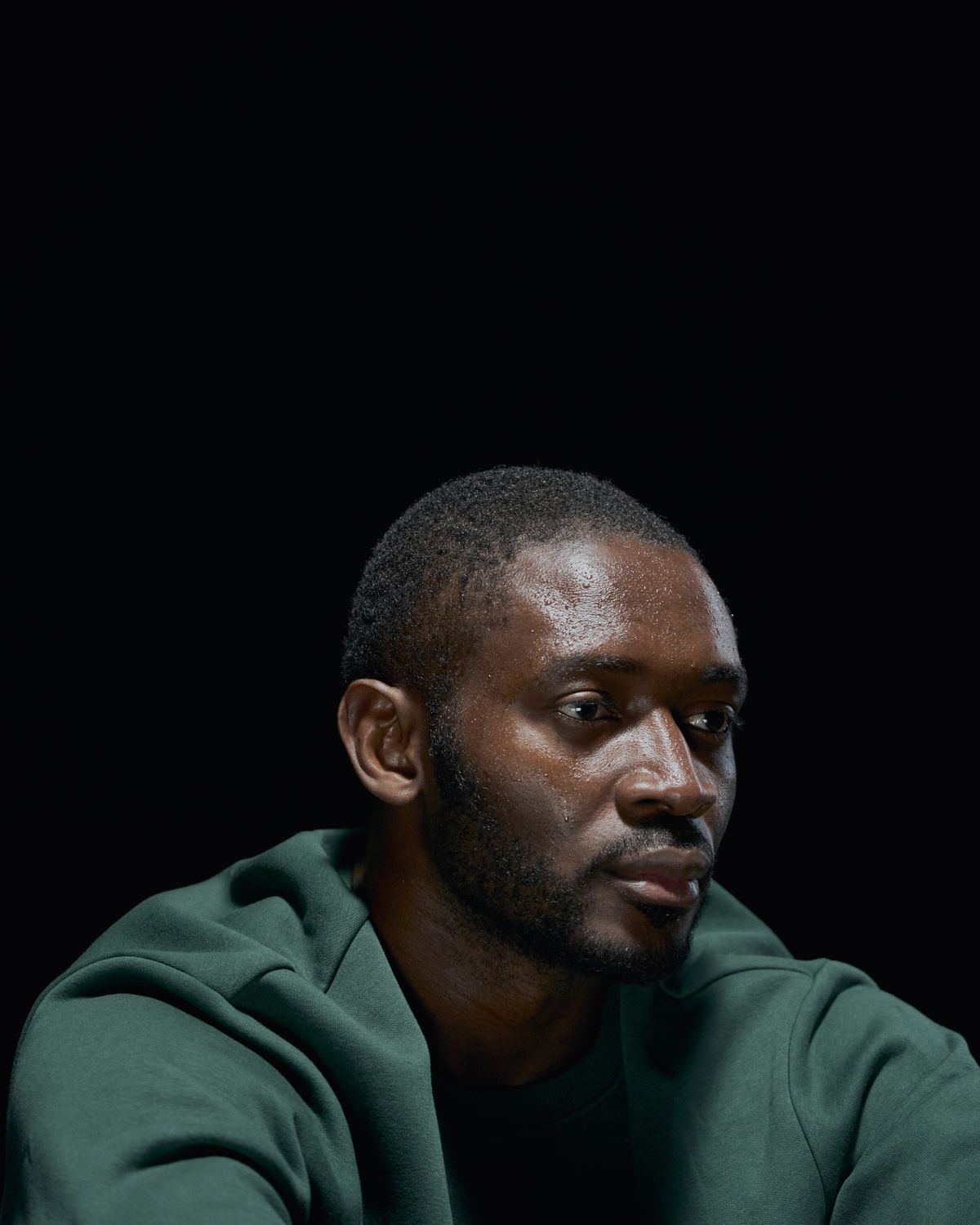
Close-up portrait of a man with a shaped beard
Facial-hair pattern and boundary context: Pexels
A visible result across a moving three-dimensional surface

Beard transplantation is facial design, not simply density

Facial hair changes direction across the sideburn, cheek, jawline, chin, lower lip, and moustache. Recipient sites must follow these transitions at very shallow angles so the hairs lie close to the skin rather than projecting outward.

Suitable scalp follicles are commonly harvested by FUE or FUT and redistributed to the face. Transplanted hairs generally retain donor characteristics, so scalp-to-beard differences in calibre, colour, curl, growth length, and growth cycle should be discussed before surgery.

The reason for missing hair also matters. Congenital sparseness, a stable traumatic scar, or a selected aesthetic or gender-affirming goal may be considered differently from sudden smooth patches, active alopecia areata, dermatitis, infection, or inflammatory scarring disease.


01Donor hair keeps donor traitsScalp hair may need ongoing trimming and may not exactly match native beard hair.
02Direction changes by facial zoneMoustache, cheek, jaw, chin, and sideburn hairs cannot use one universal angle.
03The face exposes small errorsBorder shape, pitting, bumps, wrong direction, and mismatched hairs remain highly visible.
04The design is difficult to reverseConservative boundaries matter because removal or repair can leave facial scars.
Suitability before permanent design

Who may be considered for a beard transplant?

The facial-hair concern must be suitable for redistribution, the donor must offer a reasonable match, the skin must support grafts, and the expected improvement must justify permanent facial surgery.

Factors that may support treatment

  • A stable congenital, developmental, traumatic, surgical, or aesthetic facial-hair concern
  • A healthy donor region with adequate supply and acceptable calibre, colour, curl, and contrast
  • Healthy recipient skin without active infection, severe acne, dermatitis, or inflammatory disease
  • A conservative beard, moustache, goatee, sideburn, or scar design suited to the face and existing growth
  • Acceptance of visible early healing, variable growth, facial scarring risk, and long-term trimming

Reasons to investigate or postpone

  • Sudden round or oval smooth beard patches that may represent alopecia areata
  • Active folliculitis, infection, acne flare, dermatitis, inflammatory or scarring alopecia, or an unstable scar
  • Insufficient scalp donor supply or a major mismatch between proposed donor hair and native facial hair
  • A history of keloids, hypertrophic scars, pigment problems, or poor healing that has not been medically reviewed
  • Pressure to copy another person’s beard, create extreme density, or guarantee perfect symmetry and growth
Do not use transplantation to camouflage an undiagnosed beard patch. Alopecia areata can begin in the beard, and placing grafts into an active autoimmune condition does not treat the disease or guarantee lasting coverage.
From clean-shaven mapping to hair-by-hair placement

How a beard transplant is typically planned

Details vary with the facial-hair goal, existing pattern, skin and scar quality, donor characteristics, harvesting method, and the design agreed in person.

01

Goal & diagnosis

The clinician reviews when the concern began, whether it is stable, skin symptoms, medicines, hormones where relevant, scars, previous treatment, and motivation.

02

Face & growth mapping

Existing density and direction are studied across the sideburns, cheeks, jaw, chin, lower lip, and moustache with the face relaxed and moving.

03

Donor matching

The scalp donor is assessed for supply, calibre, colour, curl, hairs per unit, and how transplanted hair will compare with native facial hair.

04

Harvesting & graft selection

FUE or FUT may provide grafts. Fine single-hair units are separated for visible borders and delicate transitions.

05

Shallow recipient sites

The physician creates sites at deliberately low angles and changing directions to follow the three-dimensional surface and planned facial-hair pattern.

06

Placement & aftercare

Grafts are placed without changing the planned orientation, then protected through early facial swelling, crusting, shedding, and gradual growth.

Each zone has its own geometry

Beard, moustache, goatee, sideburn, and scar restoration

A full-beard template is not appropriate for every goal. Facial proportions, existing hair, donor characteristics, preferred grooming length, and permanent boundaries determine the plan.

Area or goalDesign priorityGraft planningImportant caution
Moustache & upper lipVery flat emergence, central direction changes, lip movement, symmetry, and a soft boundary.Fine single-hair grafts are usually important in conspicuous borders and transitions.Wrong angle or coarse multi-hair grafts can look unnatural at conversational distance.
Goatee, chin & lower lipWhorl or directional transitions, density balance, the soul-patch area, and connection to the moustache.Single and selected multi-hair units may be distributed according to existing growth and donor match.Overly geometric shapes, excessive density, and outward-pointing hairs can dominate the face.
Cheeks, jawline & sideburnsNatural upper boundary, sideburn transition, jaw contour, asymmetry, and hairstyle relationship.Larger areas can consume substantial donor supply; priorities and density gradients must be agreed.A cheek line placed too high or too straight can be difficult to disguise or reverse.
Stable scar or localised gapBlend with surrounding hairs while accounting for scar shape, thickness, mobility, and blood supply.Density may need to be conservative or staged, and test grafting may be considered in selected scars.Growth in scar tissue can be less predictable; active disease and immature scars require postponement.
Technique names do not replace facial-hair design. FUE usually describes harvesting, DHI commonly describes implanter placement, and Sapphire refers to recipient-site blade material. None guarantees correct facial angles, donor matching, natural boundaries, or graft growth.
A permanent design must work from every angle

Six factors that shape a responsible beard plan

01

Diagnosis & skin health

Sudden patches, active folliculitis, acne, dermatitis, alopecia areata, infection, and inflammatory scarring require assessment before cosmetic surgery.

02

Boundary & facial proportions

Cheek height, sideburn width, jawline, chin, moustache, lip movement, age, and existing asymmetry guide a conservative outline.

03

Ultra-flat emergence angles

Facial hairs usually lie close to the skin and change direction repeatedly. Small angular errors can make grafts visibly project.

04

Single-hair selection

Fine single units help soften exposed borders, moustache edges, and transitions; larger units require deliberate placement away from delicate lines.

05

Donor-to-beard match

Calibre, colour, curl, growth speed, maximum length, and contrast with existing facial hair influence whether scalp grafts will blend.

06

Permanent grooming reality

The design should still look acceptable clean-shaven, as stubble, and grown out. Transplanted scalp hair may require regular trimming.

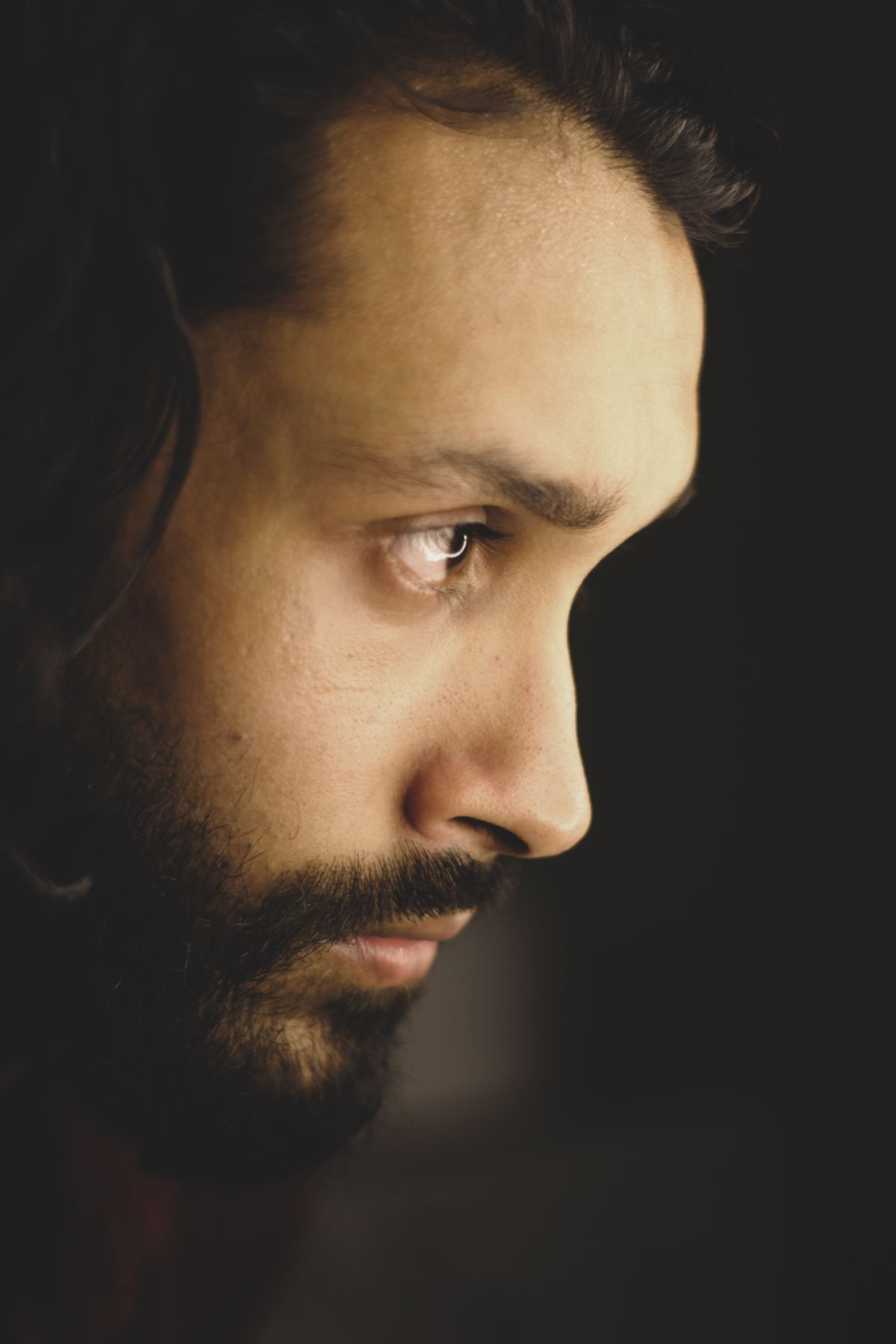
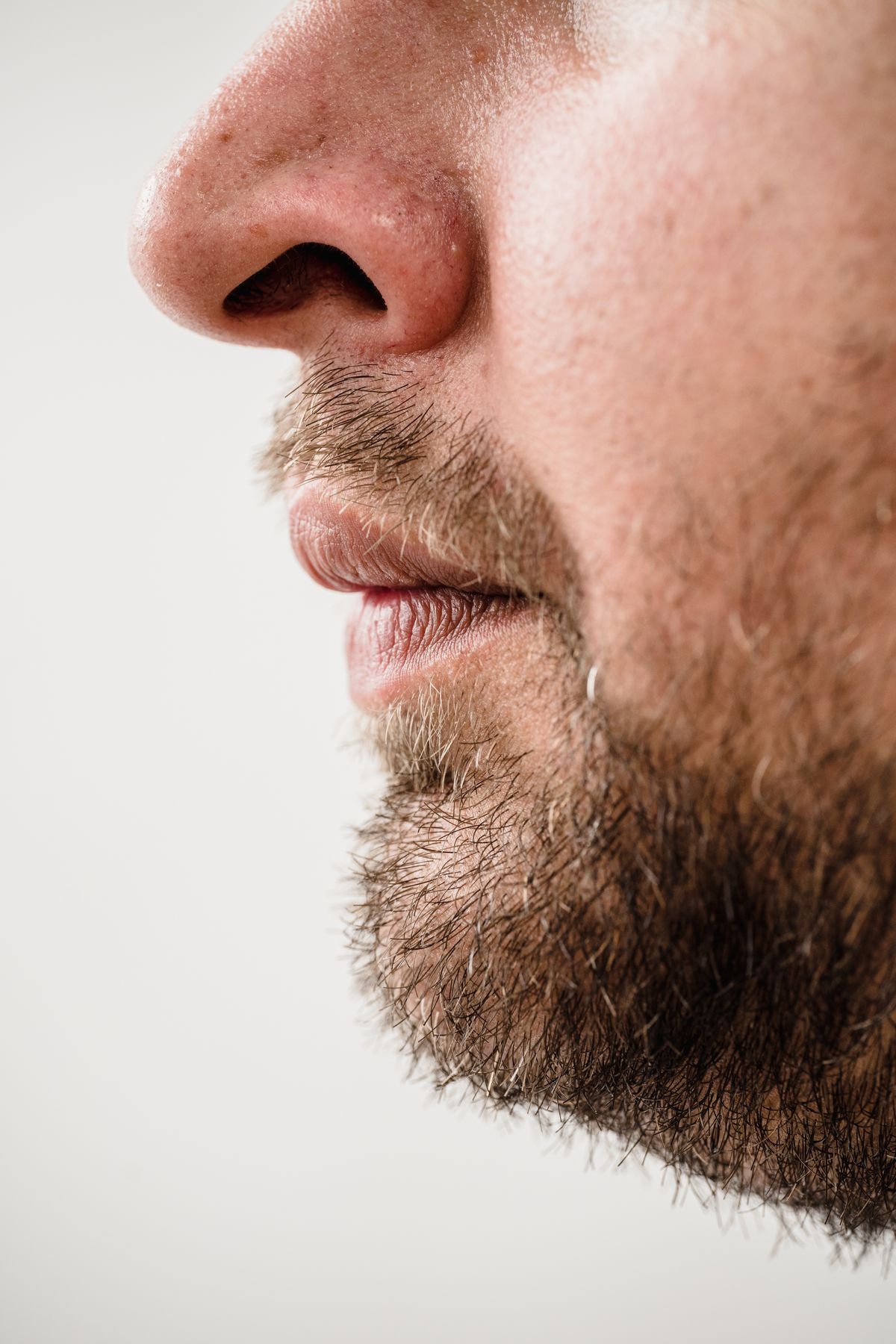
Detailed side profile showing a man’s beard and skin texture
Facial-hair calibre, direction, and skin context: Pexels
A donor graft does not transform into native beard hair

Match scalp hair to the face before counting grafts

The back and sides of the scalp are common donor sources, but scalp hair can differ from beard hair in calibre, curl, colour, growth speed, and terminal length. It usually retains those donor characteristics after transplantation.

  • Compare donor hair with the beard in natural light and at the intended grooming length.
  • Ask how single-hair units will be obtained for borders if the scalp contains many multi-hair units.
  • Confirm the approximate number of grafts and hairs; they are not the same measurement.
  • Reserve donor supply for possible future scalp hair loss or repair instead of treating it as unlimited.
VIPmedi partner network

Coordinated access to established hospital groups

VIPmedi works with Acıbadem, Memorial, Medical Park, Medipol, and Medicana. We help coordinate your enquiry with a relevant facility and ask the proposed team to address facial-hair experience, donor matching, and individual suitability.

Acıbadem logoAcıbadem
Memorial logoMemorial
Medical Park logoMedical Park
Medipol logoMedipol
Medicana

Partner status does not mean every branch or team offers beard transplantation or has the same facial-hair experience. VIPmedi confirms the proposed facility, responsible physician, team roles, available service, and individual review before treatment.

Your visit to Turkey

From clean-shaven photographs to planned follow-up

01Contact VIPmediShare front, profile, three-quarter, under-chin, clean-shaven or short-stubble, and scalp-donor photographs plus your goals and travel period.
02Clinical reviewA partner team reviews the pattern, skin, scars, diagnosis, medicines, previous treatment, donor match, and whether further dermatology records are needed.
03Confirm experience & planReview the named physician, team roles, facial-hair experience, proposed zones, donor method, graft range, risks, alternatives, and estimate.
04Examine & approve designComplete in-person skin and donor assessment, draw the beard with the face relaxed and moving, and agree every permanent boundary.
05Recover & monitorAttend early review and leave with facial washing, sleeping, shaving, product, medicine, warning-sign, and longer-term follow-up instructions.
Approve the design in a mirror—not only on a phone screen. The outline should be checked from both profiles, below the chin, at conversation distance, and with facial movement before recipient sites are created.
A quote should explain the complete procedure

What affects beard-transplant cost in Turkey?

Cost depends on the facial areas treated, design complexity, graft requirement, donor method, scar or skin findings, responsible physician and team, facility, follow-up, and documented travel services.

Diagnosis & skin reviewFacial examination, scar or alopecia assessment, previous records, selected tests, and responsible physician
Area & design complexityMoustache, goatee, cheeks, jawline, sideburns, local gaps, scars, transitions, and symmetry planning
Donor & harvestingScalp supply, hair match, FUE or FUT approach, trimming, extraction or strip plan, and graft preparation
Recipient-site detailSingle-hair selection, shallow changing angles, graft distribution, existing-hair blending, and procedure time
Facility & follow-upProcedure room, local anaesthesia, medicines, facial washing, early reviews, records, and complication pathway
Documented travel supportOnly specified transfers, accommodation, translation, exclusions, companion costs, and extra nights
Before paying, request a written plan. Confirm the hospital and branch, responsible physician, who creates facial recipient sites, who places grafts, beard experience, diagnosis, exact zones, approximate graft range, donor method, inclusions, cancellation terms, and complication responsibilities.
Visible early healing, gradual later growth

A realistic beard-transplant recovery and growth timeline

Recovery varies by treatment area, graft count, harvesting method, facial skin response, and individual healing. The treating team’s instructions take priority over generic schedules.

01First days

Protect face & donor

Redness, swelling, crusts, tenderness, tightness, and temporary numbness can occur. Do not touch, rub, shave, cover, or apply products unless instructed.

02First weeks

Crusts clear gradually

Clean exactly as directed and do not pick. The team determines when shaving, exercise, sun exposure, skincare, and normal grooming can resume.

03Following months

Shedding before regrowth

Transplanted shafts commonly shed. New growth appears gradually and can initially be uneven, fine, wiry, or differently directed while it matures.

04Later maturation

Judge shape over time

Calibre, direction, curl, coverage, and blending continue evolving for many months. Transplanted scalp hair may require regular trimming.

Contact the treating team promptly for increasing pain, spreading redness, pus, fever, heavy or persistent bleeding, marked swelling, rash or breathing difficulty, darkening or breakdown of skin, or any symptom the discharge instructions identify as urgent. Seek immediate local medical care for a serious or rapidly worsening problem.
Informed consent matters

Risks, limitations, and visible facial concerns

Beard transplantation is surgery performed on highly visible skin. Careful planning can reduce avoidable problems, but it cannot eliminate risk or guarantee density and growth.

Possible medical and healing issues

  • Pain, bleeding, facial swelling, crusting, itching, temporary numbness, or altered sensation
  • Infection, folliculitis, acne-like or ingrown-hair-like inflammation, delayed healing, or reaction to medicines or anaesthesia
  • Temporary shedding of transplanted or nearby native facial hair
  • Small donor scars or a linear FUT scar, facial pigment change, pitting, cobblestoning, or raised/problematic scars

Possible design and growth issues

  • Lower-than-expected growth, uneven density, visible gaps, asymmetry, or need for further treatment
  • Hair projecting away from the face because of incorrect recipient angle or graft rotation
  • An unnatural cheek line, sideburn transition, moustache pattern, or overly geometric beard boundary
  • Mismatch in calibre, colour, curl, growth length, or texture between transplanted scalp hair and native beard hair
Clear answers before you travel

Beard-transplant FAQs

What is a beard transplant?

It is hair-restoration surgery that moves suitable donor follicles—commonly from the back or sides of the scalp—to selected areas of the beard, moustache, goatee, sideburns, or a stable facial scar.

Who may be a suitable candidate?

Selected adults with stable congenital sparseness, local gaps, a mature scar, or a carefully assessed aesthetic or gender-affirming goal may be considered when donor hair matches reasonably, facial skin is healthy, and expectations fit the available graft supply.

Can a transplant make a naturally patchy beard fuller?

It may improve selected stable areas, but normal variation should first be distinguished from disease. The likely visual gain depends on existing facial hair, donor match, treatment area, design, and the number and type of usable grafts.

Can alopecia areata in the beard be transplanted?

Sudden smooth round or oval beard patches can be alopecia areata. Active autoimmune hair loss is generally not treated with routine transplantation. Dermatology assessment and disease management should come first because activity can recur and affect native or transplanted hair.

Can facial scars receive beard grafts?

Selected mature, stable scars may be considered after assessment of cause, age, thickness, mobility, blood supply, inflammation, and healing history. Growth can be less predictable in scar tissue, and conservative or staged placement may be appropriate.

Can beard transplantation support a gender-affirming goal?

It may be part of an individual gender-affirming plan. Natural facial-hair development, hormone treatment where relevant, donor characteristics, facial proportions, timing, and personal goals should be reviewed with the appropriate clinical teams before permanent design.

Is FUE or DHI better for a beard transplant?

They commonly describe different stages. FUE describes individual-unit harvesting, while DHI usually describes implanter placement. Facial diagnosis, donor matching, recipient-site angle, graft selection, and the responsible physician matter more than the label.

Where does the donor hair come from?

The back and sides of the scalp are common donor sources because they may provide a dependable supply. The physician must compare calibre, colour, curl, growth length, and hairs per unit with the existing beard. Other donor sources are specialist exceptions, not automatic alternatives.

Will transplanted scalp hair behave exactly like beard hair?

Not necessarily. Transplanted hair generally retains donor characteristics. Scalp hair may grow longer or at a different rate and can differ in calibre, curl, and colour, so regular trimming and grooming may be necessary.

How many grafts will I need?

There is no universal number. A small scar or moustache gap differs greatly from complete cheek and jaw restoration. Existing density, facial area, donor match, desired boundaries, hairs per graft, and realistic coverage determine the estimate.

Why are single-hair grafts important?

Natural facial-hair borders often require fine single hairs to avoid plug-like clusters. Carefully selected multi-hair units may be used in less exposed areas when they match the existing pattern and planned density.

When can I shave after surgery?

The treating team decides based on healing and technique. Do not shave, trim, pick crusts, or apply unapproved skincare and grooming products until specifically cleared. Starting too early can irritate the skin or disturb healing grafts.

Is a beard transplant permanent?

Transplanted follicles often retain donor characteristics, but no surgeon should guarantee every graft or a lifelong appearance. Growth varies, facial skin and native hair can change, and removal or repair of an unsuitable design can leave scars.

When will growth appear, and how long should I stay in Turkey?

Early transplanted shafts commonly shed before gradual regrowth over months. The partner team determines the required stay for consultation, surgery, washing, and review. Keep travel flexible because in-person findings or healing concerns can change the schedule.

How do I request an individual beard-transplant review?

Use the VIPmedi Contact Us page. Include clear front, both-profile, three-quarter, under-chin, clean-shaven or short-stubble, and scalp-donor photographs; the exact areas you want changed; onset and stability; skin symptoms; diagnoses; scars; medicines; hormone treatment where relevant; previous procedures; and preferred travel period.

Take the next step

Let’s discuss beard transplantation in Turkey

Tell us which facial-hair areas concern you, whether the pattern is stable, your skin and scar history, previous treatment, donor-hair characteristics, grooming preference, and travel period. VIPmedi can help coordinate an initial enquiry with an appropriate partner team.

Contact VIPmedi Email: [email protected]

Use the contact page for your initial enquiry. Do not send urgent medical problems through a website form.